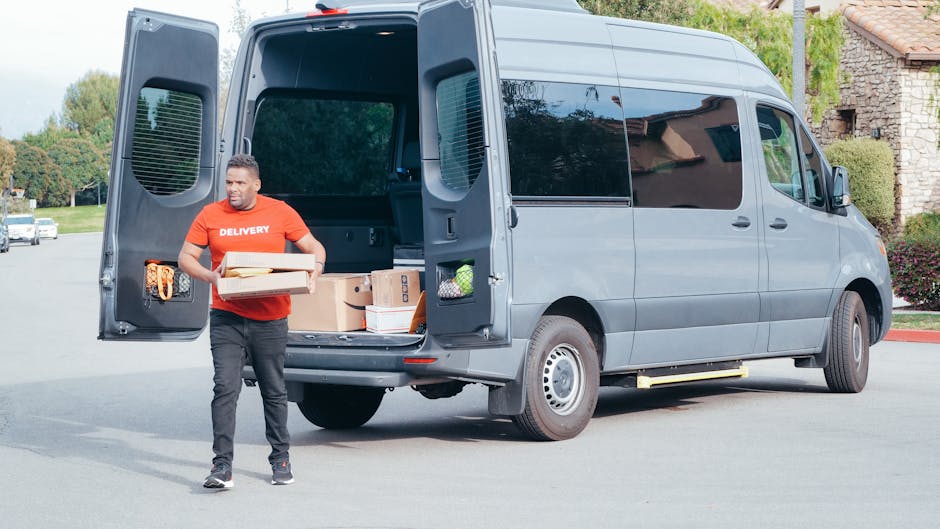
Insider tips for booking a man with van in Mile End
Booking a man with van in Mile End sounds simple on paper. You ring around, get a price, choose a slot, job done. But in real life, the difference between a smooth move and a stressful one often comes down to the small details: access, timing, parking, what needs lifting, and how clearly you explain the job. That is especially true in Mile End, where tight streets, flats, shared entrances, and busy London traffic can turn a "quick run" into a long day if you are not prepared.
This guide pulls together the insider tips people usually learn the hard way. If you are moving a few pieces of furniture, shifting the contents of a studio, or just need help getting bulky items across East London, you will find practical advice here on pricing, comparison, safety, and how to book with more confidence. Not glamorous stuff, maybe. Very useful stuff? Absolutely.
Table of Contents
- Why Insider tips for booking a man with van in Mile End Matters
- How Insider tips for booking a man with van in Mile End Works
- Key Benefits and Practical Advantages
- Who This Is For and When It Makes Sense
- Step-by-Step Guidance
- Expert Tips for Better Results
- Common Mistakes to Avoid
- Tools, Resources and Recommendations
- Law, Compliance, Standards, or Best Practice
- Options, Methods, or Comparison Table
- Case Study or Real-World Example
- Practical Checklist
- Conclusion
- Frequently Asked Questions
Why Insider tips for booking a man with van in Mile End Matters
Mile End has its own moving rhythm. There are flats above shops, side roads that narrow quickly, loading spots that disappear faster than you would like, and the usual London mix of cyclists, buses, and people trying to do three things at once. That means the cheapest quote is not always the best value, and the fastest response is not always the most reliable service.
Insider tips matter because a man with van service is usually flexible, but flexibility only helps if the job has been described properly. A two-room move with stairs, no lift, and a tight parking situation is a very different job from collecting a sofa from a ground-floor flat. If you get that wrong, you can end up with delays, extra charges, or a van that is too small. Nobody wants to be halfway through a move and realise the mattress will not fit, honestly.
There is also a trust angle. You are handing over furniture, boxes, and often sentimental items. A good booking process helps you spot whether the provider is organised, insured, and transparent. That is the kind of calm you want before moving day, especially if you are juggling work, children, or a lease deadline.
How Insider tips for booking a man with van in Mile End Works
At a basic level, a man with van service is exactly what it sounds like: a driver, a van, and help with loading and unloading. In practice, though, the service can range from a quick single-item collection to a more structured local removal. Some providers work by the hour, others quote a fixed price, and some do a mix of both depending on distance, access, and how many hands are needed.
In Mile End, the booking process usually starts with a few practical questions:
- What are you moving?
- How many stairs are involved?
- Is there a lift, and is it big enough?
- How far apart are pickup and drop-off?
- Will parking or loading access be tricky?
- Do you need just transport, or loading help too?
The better your answers, the more accurate the quote. That sounds obvious, but people often underestimate how much access details change the job. A van parked a short walk away can still mean extra carrying time. A front door on a busy road can mean waiting. A narrow stairwell can slow everything down. None of that is a problem if it is known in advance.
It also helps to think of the booking as a mini planning exercise, not just a quick call. The best local providers are usually happy to discuss the load, suggest the right vehicle size, and warn you if your move might need more than one person. That is a good sign, by the way. Clear questions usually mean clear service.
Key Benefits and Practical Advantages
When booked properly, a man with van service can be a very practical middle ground between doing everything yourself and hiring a full removal company. For many Mile End residents, that balance is the whole point.
Here are the main benefits:
- Lower cost for smaller moves: If you are not moving a whole house, paying for a large removal crew can be overkill.
- Local flexibility: A van can often handle same-day or short-notice jobs, which is handy if plans change.
- Less physical strain: You still need to pack, but the heavy lifting is shared, which matters more than people admit at the time.
- Better for awkward items: Sofas, wardrobes, mattresses, and appliances are much easier with a van and proper loading equipment.
- Simple for short distances: For moves within Mile End, Bow, Bethnal Green, or nearby East London streets, it can be the most efficient option.
There is another benefit that is easy to overlook: confidence. Once your slot is confirmed, the vehicle size is right, and the access plan is clear, the whole move feels less chaotic. That calm is worth a lot. Let's face it, moving day can already be noisy enough without improvising every five minutes.
If you want to understand the service type more broadly, it can help to compare it with a broader man with van option or look at the company's wider removal services if your job is bigger than a quick transport run.
Who This Is For and When It Makes Sense
This kind of service suits more people than you might think. It is not just for students or last-minute movers. In Mile End, it often makes sense for:
- people moving from a studio or one-bedroom flat
- tenants needing help at the end of a tenancy
- anyone collecting furniture from a marketplace seller
- small businesses shifting stock, files, or equipment
- families moving a few large items rather than a full house
- people who need help with bulky waste or recycling runs, where permitted and agreed
It also fits situations where you do not need a full-size removal team, but you do need a professional eye. For example, if you have a narrow staircase, a heavy wardrobe, and a tight time window between key handover and cleaning, a local van service can save a lot of hassle.
On the other hand, it may not be the best fit if you are moving a large family home, dealing with a lot of fragile furniture, or relocating an office full of tech and records. In those cases, a more specialised removal plan may be safer and more efficient. A useful starting point is to compare man and van removals with broader house removals so you can match the service to the job instead of guessing.
Step-by-Step Guidance
If you want the booking to go smoothly, treat it like a quick project. Nothing complicated. Just organised.
- List everything that needs moving. Include furniture, boxes, appliances, and awkward bits like mirrors or plants. People always forget one or two items. Always.
- Measure the largest items. The sofa, bed base, wardrobe, and fridge matter most. A van can only hold what fits safely.
- Check access at both ends. Staircases, lifts, parking distance, basement levels, or timed entry all affect the job.
- Choose the right service level. Decide whether you need transport only, loading help, or full loading and unloading support.
- Ask how the quote is built. Is it hourly, fixed, or based on distance and access? Make sure you understand possible extras before booking.
- Share realistic timing. If your tenancy ends at midday, say so. If parking is tight by school-run time, say so. Small detail, big difference.
- Confirm insurance and terms. You want to know what happens if something is damaged, delayed, or cannot be moved as planned.
- Book with a buffer. If your schedule is tight, avoid squeezing everything into the exact last minute. A little breathing room helps.
A good rule of thumb: if you would worry about explaining it on the day, explain it now. That is where many problems disappear before they happen.
For bigger or more fragile loads, it can also help to read up on packing and unpacking services and insurance and safety, especially if you are nervous about breakables or valuable pieces.
Expert Tips for Better Results
Here is where the small gains happen. These are the kinds of tips that make a real difference but are easy to miss if you have not moved much in London.
1. Ask what kind of van is actually coming
"Van" can mean a range of sizes. If you have a one-bed flat worth of furniture, you need more than guesswork. Ask whether the vehicle is a small transit-style van, a medium van, or something closer to a larger moving van. The wrong vehicle size creates delay, and delay usually costs money.
2. Be honest about stairs and parking
It is tempting to say "should be fine." But should be fine is not the same as fine. If there is no direct parking outside, or if your building has a long internal corridor, say it clearly. A driver who knows the reality can plan better. Simple.
3. Time the move around local pressure points
Mile End can feel very different depending on the time of day. Early morning often works better for loading, while late afternoon can be slower because of traffic and general footfall. If you can choose a quieter slot, do it.
4. Protect the easy-to-damage items first
Mirror edges, table corners, mattress fabric, and TV screens are common weak spots. Wrap them before the van arrives if you can. Even a little prep helps. It is the boring part that saves the day.
5. Keep a short item list on your phone
Not glamorous, but useful. When the provider asks for details, you will not be standing in a hallway trying to remember whether the chest of drawers is coming too.
One small practical note: if your move involves furniture disposal or a mix of keep, donate, and discard items, it can help to read Tower Hamlets furniture disposal guidance and the local bulky waste pickup overview so you do not mix removal with disposal in a way that causes problems.
Common Mistakes to Avoid
Some mistakes come up again and again. Truth be told, they are all avoidable if you slow down for five minutes before booking.
- Booking without enough detail: "Just a few things" can mean very different things to different people.
- Ignoring access issues: Tight staircases and awkward parking are not side notes. They are central to the job.
- Choosing only on price: The cheapest option can become expensive if the job takes longer than expected or if the van is too small.
- Forgetting insurance questions: If something matters to you, ask how it is protected.
- Underestimating packing time: The van might be ready, but your boxes are not. That creates tension quickly.
- Leaving key items until last minute: Chargers, documents, kettle, medication, and cleaning supplies should be accessible, not buried under cushions and panic.
A lot of move-day stress comes from poor expectations, not bad service. That is actually good news, because expectations are easier to fix than walls, weather, or a broken lift. To be fair, the lift being out of order is never ideal, but you can at least plan around it.
Tools, Resources and Recommendations
You do not need fancy equipment to make a local move easier, but a few simple tools help a lot. In practice, people get the best results when they prepare like this:
- Measuring tape: Useful for sofas, wardrobes, bed frames, and door gaps.
- Basic packing materials: Boxes, tape, labels, bubble wrap, and blankets.
- Phone notes or a checklist: Keeps the move organised and saves repeated messages.
- Photos of awkward items: A picture can explain more than a rushed description.
- Building or parking notes: Floor number, lift size, gate code, loading restrictions, and access route.
If you are comparing service types, you may also find it useful to review pricing and quotes before you commit. Transparent pricing is often the difference between a calm booking and a frustrating one. If you are not sure whether you need a simpler transport job or a fuller move, browsing movers and removals near me can help you understand the scope of what is available locally.
For people moving offices or working around business hours, the wider service pages on office removals and commercial moves can also be useful when your job has a work-related angle rather than a home-move one.
Law, Compliance, Standards, or Best Practice
For a move like this, the main point is not to drown in rules. It is to understand the practical standards that responsible providers should follow. In the UK, a professional moving service should be clear about its terms, explain how payments work, and make reasonable efforts to protect goods and people during loading, transport, and unloading.
Best practice usually includes:
- clear upfront quotes or a clear pricing method
- reasonable care when handling items
- appropriate insurance arrangements, explained in plain English
- safe lifting and loading practices
- honest communication about delays or limitations
If your move involves shared entrances, tenant buildings, or public pavements, you should also think about access and safety for neighbours and passers-by. Do not block where you should not block, and do not assume a loading space is available just because it would be convenient. London rarely rewards optimism there.
Where disposal is involved, keep moving and waste separate in your mind. A van service for transport is not the same as an authorised rubbish collection service, and the right arrangement matters. If you are unsure, ask directly rather than assuming. A decent provider should be happy to clarify what they can and cannot take.
It is also sensible to read the provider's policies before booking, especially the terms and conditions, payment and security, and health and safety policy. That is not overcautious; it is just smart. The quiet kind of smart.
Options, Methods, or Comparison Table
If you are trying to decide what kind of service to book, it helps to compare the most common options side by side. The right choice depends on volume, access, time pressure, and how much help you want.
| Option | Best for | Typical strengths | Possible drawback |
|---|---|---|---|
| Man with van | Small to medium moves, single items, local transport | Flexible, often cost-effective, quick to book | May be less suitable for larger homes or complex moves |
| Full removal team | Whole-house or more complicated relocations | More hands, more structure, better for big loads | Usually costs more than a smaller local service |
| Self-move with hired vehicle | People who want control and have strong lifting help | Can be cheaper on paper | Time-consuming, physically demanding, more room for mistakes |
| Specialist item move | Pianos, delicate antiques, oversized or awkward furniture | Tailored handling, more protection | Not needed for standard boxes and furniture |
In Mile End, the sweet spot is often the first option: a man with van service for practical, local, lower-volume jobs. But if the move starts looking like a puzzle of stairs, wardrobes, beds, and multiple drop-offs, you may want to step up to a more complete removal company or compare against house movers. The trick is matching the method to the real job, not the hoped-for version of it.
Case Study or Real-World Example
Here is a realistic example. A renter in Mile End is leaving a one-bedroom flat and moving a short distance to a new place nearby. On paper, the job looks easy: a bed frame, mattress, two chests of drawers, a small sofa, a desk, and about a dozen boxes. Then the details appear. Third floor. No lift. Parking is limited outside both buildings. The bed frame is awkwardly wide. The move needs to happen between work shifts.
What makes the difference? The booking is described properly. The mover is told exactly what is being moved, which floor the items are on, whether anyone can help at either end, and what time access is available. The van arrives with enough space, the plan is realistic, and the job is finished without trying to force a square sofa through a narrow gap at the last second. That last bit matters more than it sounds like it would.
Now compare that to a vague booking that says "small flat move, probably fine." Different experience entirely. One leads to a calm loading process. The other leads to awkward phone calls, an overfull van, and that familiar move-day feeling of "we should have sorted this yesterday."
For a bigger job, especially if you are dealing with tricky access or fragile furniture, reading about handling narrow staircases and access issues in Mile End can be genuinely useful. And if you are still deciding between a lighter moving option and a broader package, the comparison in man and van versus full removals in Mile End is a sensible next read.
Practical Checklist
Use this before you confirm the booking. It saves hassle, and a surprising amount of money in some cases.
- Have I listed every item that needs moving?
- Do I know the approximate size of the largest items?
- Have I checked stairs, lift access, and parking?
- Have I told the provider about narrow halls, long carries, or restricted access?
- Do I understand whether the quote is fixed or hourly?
- Have I asked about insurance and what it covers?
- Have I confirmed the date, time, and collection window?
- Do I know whether packing help is included?
- Have I separated items I am keeping from items I am discarding?
- Have I kept essentials aside for easy access on the day?
If you can tick most of those off, you are in very good shape. If not, no drama. Just fix the gaps before confirming. That is all most people need, really.
Conclusion
The best insider tips for booking a man with van in Mile End come down to one simple idea: the more clearly you describe the job, the easier it is to get the right service at the right price. Measure the bulky items, be honest about access, ask how pricing works, and check the practical details before moving day. It is not about being fussy. It is about being prepared.
A well-booked local move feels different. Less rushed. Less guesswork. Less of that panicked "where did we put the kettle?" energy. And in Mile End, where streets, stairs, and schedules can all add their own little twist, that preparation really pays off.
For a calmer move, choose clarity over assumptions, and the rest tends to fall into place.
Get a free quote today and see how much you can save.
Frequently Asked Questions
What should I tell a man with van before booking?
Tell them what you are moving, where it is going, how many stairs there are, whether there is a lift, and if parking is likely to be awkward. The more specific you are, the more accurate the quote will be.
Is a man with van cheaper than a full removal company?
Usually, yes, for smaller jobs. If you are only moving a few items or a modest flat, a man with van can be more cost-effective. For larger homes or more complex moves, a full removal team may offer better value overall.
How far in advance should I book in Mile End?
For a straightforward local move, a few days' notice can sometimes be enough, but earlier is better if you have a tight deadline, a busy weekend slot, or tricky access. Last-minute jobs are possible, but they do reduce your options.
Do I need to measure my furniture first?
Yes, for anything bulky. Sofas, beds, wardrobes, and large appliances are the usual trouble spots. A quick measurement helps avoid delays and awkward surprises on the day.
What if my building has no lift?
Tell the provider as soon as you book. Stairs change the job quite a bit, especially on upper floors. It is not a deal-breaker, but it should never be hidden or guessed away.
Can a man with van help with loading and unloading?
Most can, but you should confirm this when you book. Some services are transport-only, while others include lifting support as standard or as an extra.
Are same-day bookings possible in Mile End?
Sometimes, yes. Local services are often flexible, but same-day availability depends on the time, the size of the job, and whether a suitable van is free. It is worth asking quickly rather than assuming.
What is the best time of day to move locally?
Earlier in the day is often easier, especially if parking is tight or traffic is an issue. That said, the best time is the one that fits your access, building rules, and schedule.
Should I choose fixed price or hourly pricing?
It depends on the job. Fixed pricing can give peace of mind for clear, well-described moves. Hourly pricing can suit flexible jobs, but it can become expensive if access is difficult or the load is larger than expected.
What should I ask about insurance?
Ask what is covered, what is excluded, and how to report damage if it happens. You do not need legal jargon; you need plain language and a clear answer. If a provider explains this well, that is usually a good sign.
Can a man with van take items to be recycled or disposed of?
Sometimes, but only if the provider offers that service and the items are allowed under local and company rules. Transport and disposal are not always the same thing, so it is best to check in advance rather than assume.
What is the biggest mistake people make when booking?
Under-sharing details. People often leave out stairs, parking problems, or the true size of the load, then wonder why the move feels stretched. A few extra minutes of honesty upfront can save a lot of stress later.
How do I know if I need more than a man with van?
If you are moving a full household, lots of fragile furniture, or a job with multiple rooms and difficult access, you may need something more structured. Comparing your load to a broader removal service is usually the safest way to judge.
If you want to compare service pages or learn more about the company behind the booking, you can also review the about us page and the main home page for a quick overview of the service offering.